
Ship Sizes & Vessel Classes
Commercial Vessel Classes Explained
A practical guide to commercial vessel types, capacities, cargoes and trading markets.
Commercial ships are classified by a combination of carrying capacity, physical dimensions, cargo system and trading purpose.
Dry bulk carriers and tankers are commonly compared by deadweight tonnage (DWT). Container ships are usually described by TEU capacity, while LNG and LPG carriers are measured primarily by cubic-metre cargo capacity. Length overall, beam and draught also determine which ports, canals and terminals a vessel can use.
These classifications have direct commercial consequences. Vessel class affects the cargo parcel a ship can carry, the routes it can trade, the ports it can access and the freight economics of the voyage.
This guide covers the principal vessel classes used across dry bulk, tanker, gas and container shipping, from Handysize bulk carriers and regional coasters through to VLCCs, Q-Max LNG carriers, VLOCs and ultra-large container vessels.
Quick Answer: How Are Commercial Ships Classified?
Commercial vessel classes are based on a combination of capacity, dimensions and intended trade.
- Dry bulk carriers and tankers: usually compared using DWT
- Container ships: primarily measured in TEU
- LNG and LPG carriers: commonly compared using m³ / CBM
- Port and canal access: determined by dimensions including LOA, beam and draught
Names such as Panamax, Neo-Panamax, Suezmax, Kamsarmax and Newcastlemax developed around the physical limits of important canals, ports or terminals, while classifications such as Capesize, VLCC, VLGC and ULCV describe established commercial vessel segments.
In practice, vessel class tells you far more than how large a ship is. It helps define the cargoes, routes, infrastructure and freight market in which that vessel can compete.
Dry Bulk Vessel Classes
Vessel size shapes cargo capacity, port access and trading flexibility.
Handysize
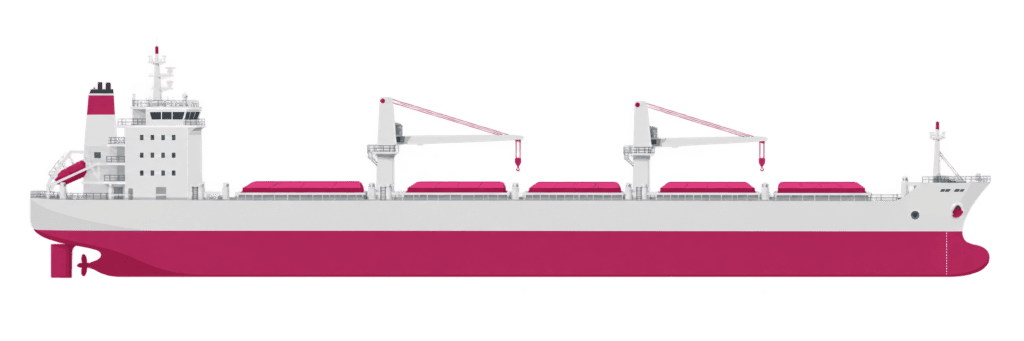
Typical size: 20,000–40,000 DWT
Typical cargoes: Grain, Sugar, Fertilizer, Steel, Scrap, Cement, Minor bulks
Trading profile: Global / Regional
Typical configuration: Often geared
Handysize vessels are among the most flexible ships in the dry bulk fleet.
Their relatively small size allows them to enter ports that cannot accommodate larger bulk carriers, while onboard cranes on many vessels reduce dependence on shore-based loading equipment.
They are commonly used for smaller parcels of agricultural commodities, steel products, fertilizer and other minor bulks.
Commercially: flexibility and port access can matter more than maximum carrying capacity.
Handymax, Supramax & Ultramax
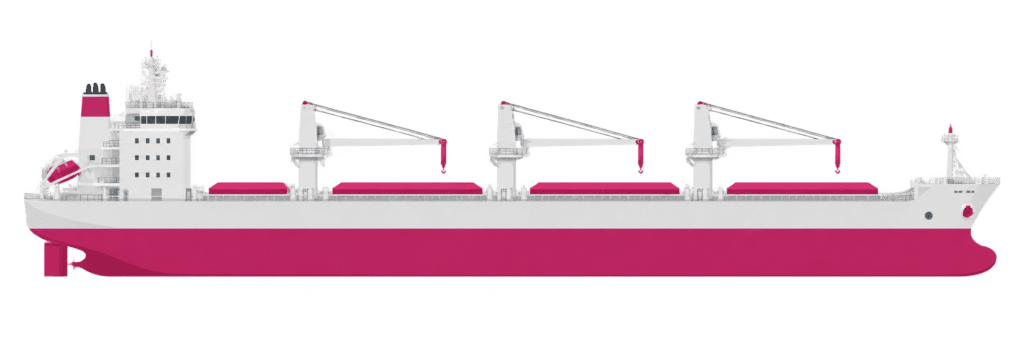
Typical size: 40,000–66,000 DWT
Typical cargoes: Grain, Fertilizer, Coal, Petcoke, Cement, Steel, Bauxite
Trading profile: Global / Highly flexible
Typical configuration: Commonly geared
This broad family sits between Handysize vessels and the larger Panamax market.
Modern Supramax and Ultramax vessels are particularly important across grain, fertilizer, coal and minor-bulk trades, combining useful cargo capacity with access to a wide range of ports.
Many carry their own cranes and grabs, allowing them to operate where terminal infrastructure is limited.
Commercially: this is one of the broadest and most versatile dry bulk trading segments.
Panamax & Kamsarmax
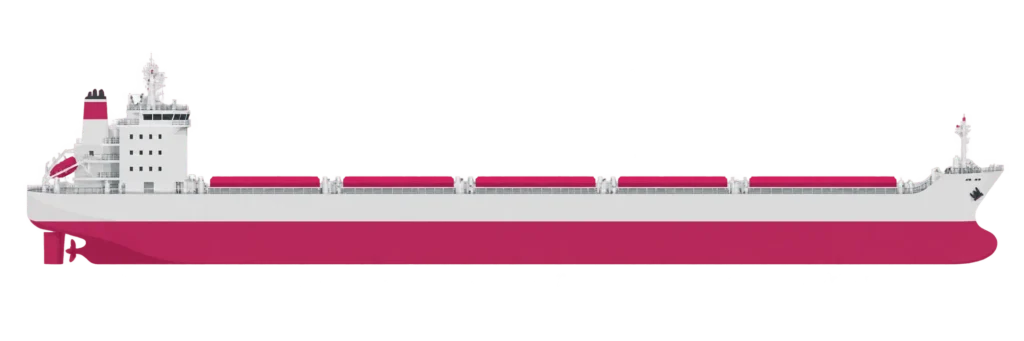
Typical size: 65,000–85,000 DWT
Typical cargoes: Grain, Coal, Bauxite, Alumina, Major bulks
Trading profile: Deep-sea / Major commodity routes
Typical configuration: Usually gearless
Panamax vessels were historically designed around the dimensional limits of the original Panama Canal locks.
Kamsarmax vessels are a slightly larger development of the class, commonly around 80,000–85,000 DWT and named for the maximum dimensions traditionally accepted at the Port of Kamsar in Guinea.
The segment is particularly important in global grain and coal trading.
Commercially: Panamax and Kamsarmax freight is closely linked to major agricultural and energy commodity flows.
Post-Panamax
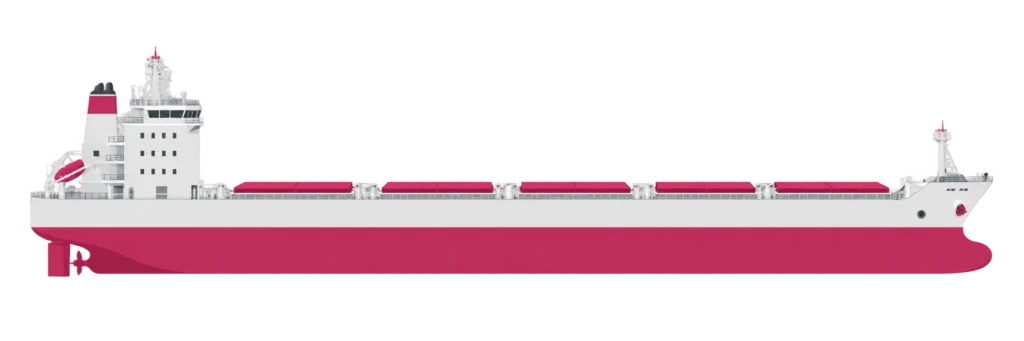
Typical size: 85,000–120,000 DWT
Typical cargoes: Coal, Grain, Bauxite, Iron ore, Other major bulks
Trading profile: Deep-sea
Typical configuration: Generally gearless
Post-Panamax bulk carriers are larger than traditional Panamax tonnage and were originally too wide to transit the old Panama Canal locks.
They provide additional carrying capacity without moving fully into the Capesize market and can be attractive on routes where ports have sufficient draught and berth capacity.
The class overlaps with several modern bulk-carrier designs, so terminology can vary between owners and markets.
Commercially: they occupy the space between Panamax flexibility and Capesize scale.
Capesize
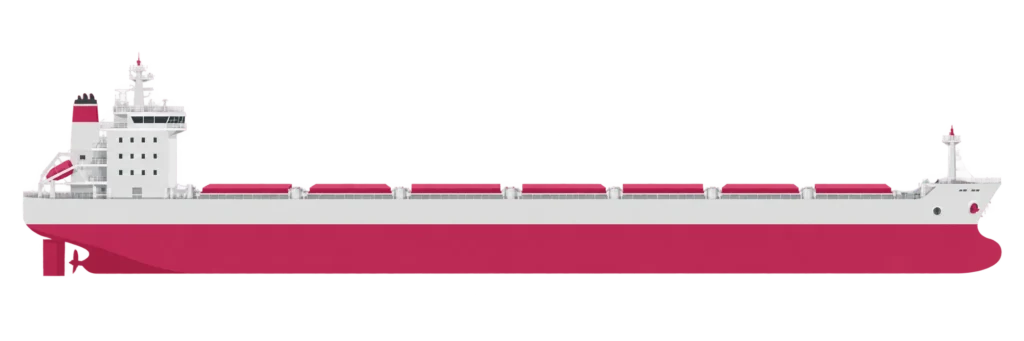
Typical size: 150,000–200,000 DWT
Typical cargoes: Iron ore, Coal
Trading profile: Long-haul / Major bulk routes
Typical configuration: Gearless
Capesize vessels are designed primarily for very large shipments of iron ore and coal.
Historically they were too large for the Panama and Suez canals and therefore had to sail around the major capes, which gave the class its name. Modern canal capabilities have changed, but the terminology remains.
The market is heavily influenced by large-volume iron ore movements from Australia and Brazil into Asia.
Commercially: Capesize earnings can be strongly affected by a relatively small number of major commodity routes and producers.
Newcastlemax & VLOC
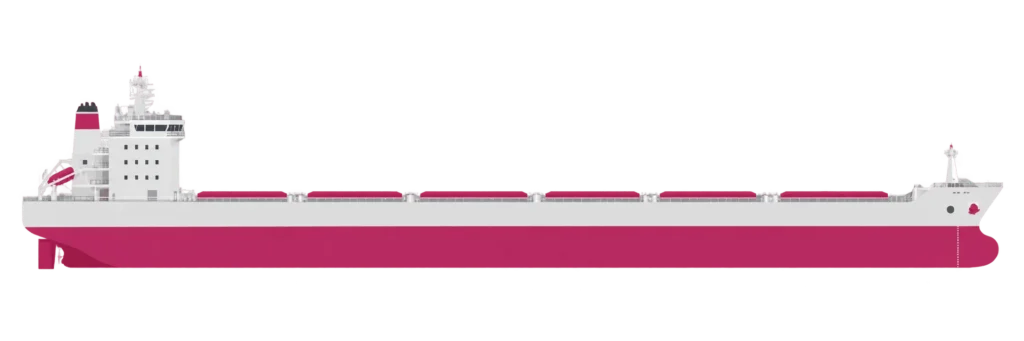
Typical size: 200,000–400,000+ DWT
Typical cargoes: Predominantly iron ore
Trading profile: Specialist deepwater / High-volume routes
Typical configuration: Gearless
Newcastlemax vessels are typically around 200,000 DWT and designed around the dimensional limits associated with the Port of Newcastle in Australia.
Above them sit Very Large Ore Carriers (VLOCs), including vessels approaching 400,000 DWT. These ships are built to move enormous quantities of iron ore between major export terminals and deepwater import facilities.
Their trading flexibility is much lower than smaller bulk carriers because relatively few ports can accommodate their dimensions and draught.
Commercially: their economics depend on scale, deepwater infrastructure and sustained high-volume commodity flows.
From Small Parcels to 400,000 Tonnes
The difference between a Handysize vessel and a VLOC is not simply one of scale.
Smaller vessels can access more ports, carry a wider range of cargoes and participate in more fragmented trades. Larger ships sacrifice that flexibility in return for much lower transport costs per tonne when moving major bulk commodities over long distances.
That distinction feeds directly into chartering strategy, freight rates, voyage economics, port selection and the experience required from brokers, charterers and operators working each segment.
Tanker Vessel Classes
Tanker size influences cargo type, route economics and terminal access.
Handysize Tanker
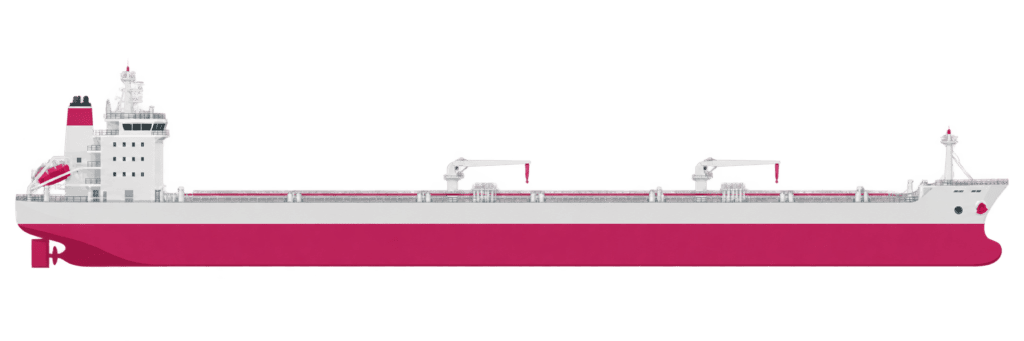
Typical size: 10,000–40,000 DWT
Typical cargoes: Refined products, Chemicals, Vegetable oils, Biofuels, Specialty liquids
Trading profile: Coastal / Regional / Short-haul
Typical configuration: Product or chemical tanker
Handysize tankers operate at the smaller end of the liquid-bulk market.
Their dimensions allow them to access smaller terminals and ports where larger vessels would be unsuitable, making them useful for regional distribution and smaller cargo parcels.
Depending on tank coatings and vessel specification, they can carry petroleum products, chemicals, edible oils and other specialist liquid cargoes.
Commercially: smaller parcel sizes and greater port access give these vessels considerable flexibility across regional liquid trades.
MR
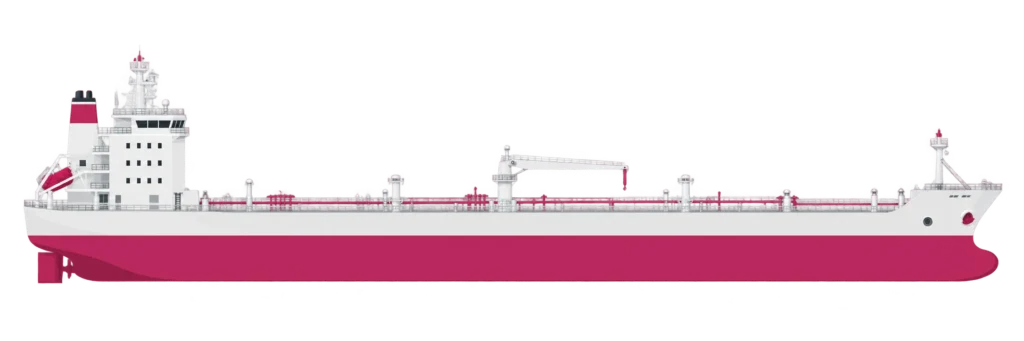
Typical size: 25,000–55,000 DWT
Typical cargoes: Gasoline, Diesel, Jet fuel, Naphtha, Gasoil, Biofuels
Trading profile: Regional / Inter-regional
Typical configuration: Clean product tanker
Medium Range tankers are one of the most widely traded vessel classes in the product tanker market.
They are large enough to move commercially meaningful parcels over international routes while remaining flexible enough to call at a broad range of terminals.
MR vessels are especially important in the movement of clean petroleum products, linking refineries, storage hubs and consuming markets around the world.
Commercially: the MR market combines global trading flexibility with deep exposure to refinery output and regional product imbalances.
LR1
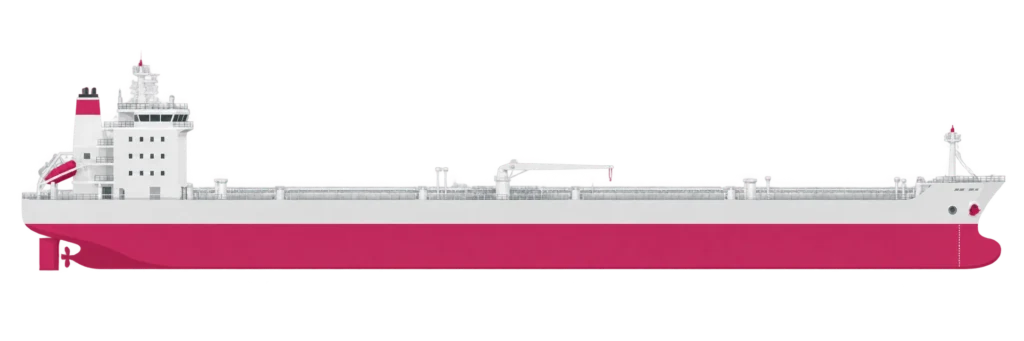
Typical size: 55,000–80,000 DWT
Typical cargoes: Naphtha, Jet fuel, Diesel, Gasoil, Refined products
Trading profile: Medium / Long-haul
Typical configuration: Large clean product tanker
Long Range 1 tankers sit above the MR segment and are generally used for larger clean-product parcels.
Their additional capacity makes them attractive on longer routes where economies of scale become more important, particularly between major refining and importing regions.
LR1 vessels can overlap with Panamax tanker dimensions and remain closely linked to movements of refined petroleum products.
Commercially: LR1s offer more scale than an MR while retaining greater flexibility than the larger LR2 segment.
Aframax & LR2
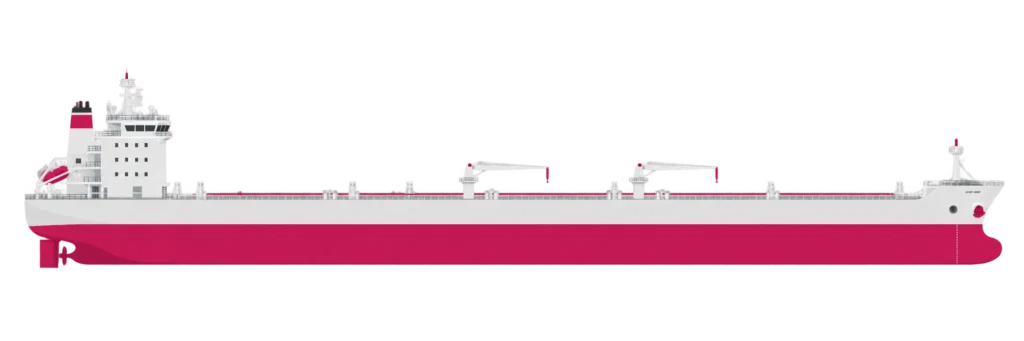
Typical size: 80,000–120,000 DWT
Typical cargoes: Crude oil, Fuel oil, Naphtha, Jet fuel, Clean petroleum products
Trading profile: Regional crude / Long-haul products
Typical configuration: Crude tanker or clean LR2
Aframax and LR2 vessels occupy a similar size range but often operate in different commercial markets.
Aframax tankers are strongly associated with crude oil and fuel-oil trades, particularly where ports or terminals cannot accommodate Suezmax or VLCC tonnage.
LR2 vessels are generally configured for clean products and are widely used on long-haul routes carrying naphtha, jet fuel and other refined products.
Commercially: vessel specification matters as much as size here, because an Aframax crude tanker and an LR2 product tanker can compete in very different freight markets.
Suezmax
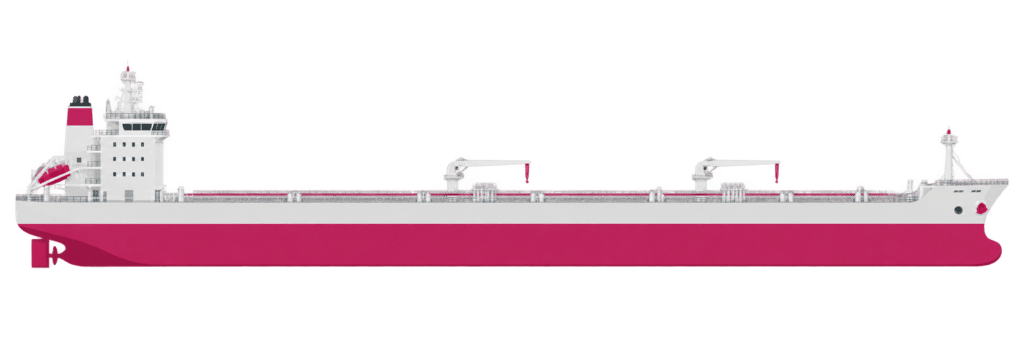
Typical size: 120,000–200,000 DWT
Typical cargoes: Crude oil, Occasionally dirty petroleum products
Trading profile: Long-haul crude
Typical configuration: Large crude tanker
Suezmax vessels are a major class within international crude-oil shipping.
The name historically refers to vessels designed around the maximum practical dimensions for transit of the Suez Canal when laden, although exact limits depend on draught and canal conditions.
They are commonly employed on crude routes from West Africa, the Mediterranean, Black Sea, Middle East and the Americas.
Commercially: Suezmaxes provide substantial crude-carrying capacity while retaining access to more ports and routes than the largest tanker classes.
VLCC & ULCC
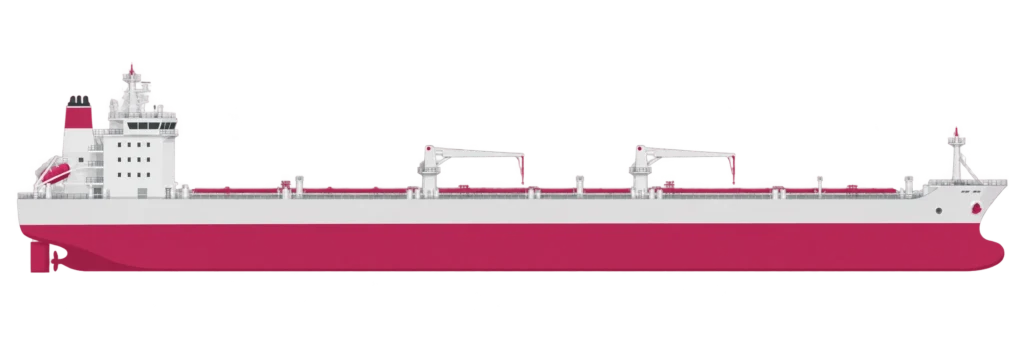
Typical size: 200,000–550,000+ DWT
Typical cargoes: Crude oil
Trading profile: Long-haul / Very large-volume crude
Typical configuration: Very large crude tanker
Very Large Crude Carriers dominate the largest deep-sea crude-oil movements.
A modern VLCC is typically around 300,000 DWT and can carry roughly two million barrels of crude oil, making the class central to long-haul exports from the Middle East and other major producing regions into Asia.
ULCCs sit above the VLCC range but are much less common, with their extreme dimensions limiting the terminals and routes they can use.
Commercially: VLCC economics are driven by scale, long voyage distances and the ability to move enormous crude parcels between major export and import hubs.
From Regional Product Parcels to Two Million Barrels
Tanker classes are defined by more than carrying capacity.
Smaller product tankers can switch between a wider range of ports and cargo programmes, while larger crude vessels depend on terminals capable of handling deeper draughts and much greater parcel sizes.
The distinction between clean and dirty cargoes is equally important. Two vessels of similar size may trade in entirely different markets depending on tank coatings, previous cargoes and technical specification.
Those differences feed directly into chartering, freight rates, terminal compatibility, voyage economics and the experience required from tanker brokers, charterers and operators.
Gas Carrier Classes
Gas carriers are defined by cargo containment, cubic capacity and trading range.
Small Gas Carrier / Coaster
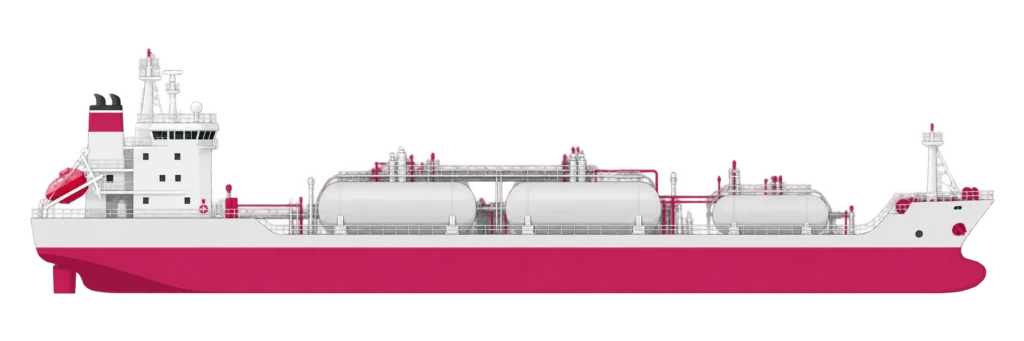
Typical size: Up to ~10,000 m³
Typical cargoes: LPG, Propane, Butane, Ammonia, Petrochemical gases
Trading profile: Coastal / Regional / Short-sea
Typical configuration: Pressurised or semi-refrigerated
Small gas carriers handle regional distribution and smaller parcel movements between terminals that may not accommodate larger vessels.
They are widely used for LPG and specialist gases, often connecting major import terminals with smaller consuming markets.
Pressurised vessels can operate without sophisticated shore refrigeration facilities, which gives them useful flexibility in developing or regional markets.
Commercially: terminal access and parcel flexibility matter more than maximum carrying capacity.
Handysize Gas Carrier
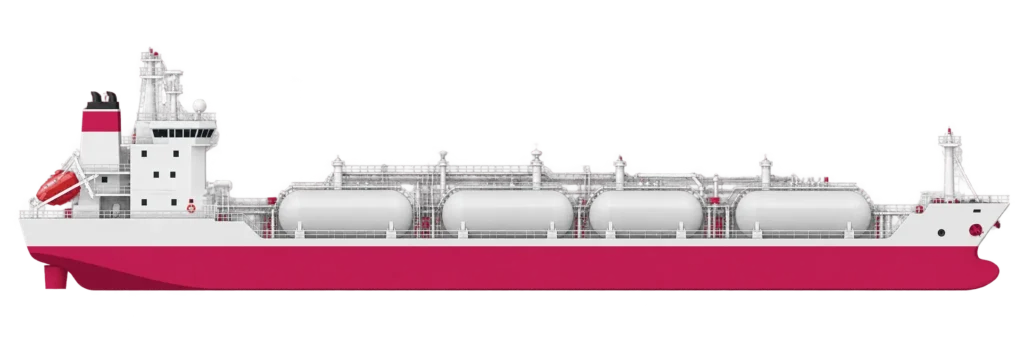
Typical size: ~10,000–25,000 m³
Typical cargoes: LPG, Ammonia, Ethylene, Propylene, Petrochemical gases
Trading profile: Regional / International specialist trades
Typical configuration: Semi-refrigerated or fully refrigerated
Handysize gas carriers sit between coastal vessels and the larger mid-size market.
Their cargo systems can allow them to handle a broader range of gases, particularly within petrochemical and ammonia trades where cargo specification is important.
They retain access to a relatively wide terminal network while carrying commercially meaningful international parcels.
Commercially: cargo capability can be just as important as vessel size, particularly in specialist petrochemical trades.
MGC/Medium Gas Carrier
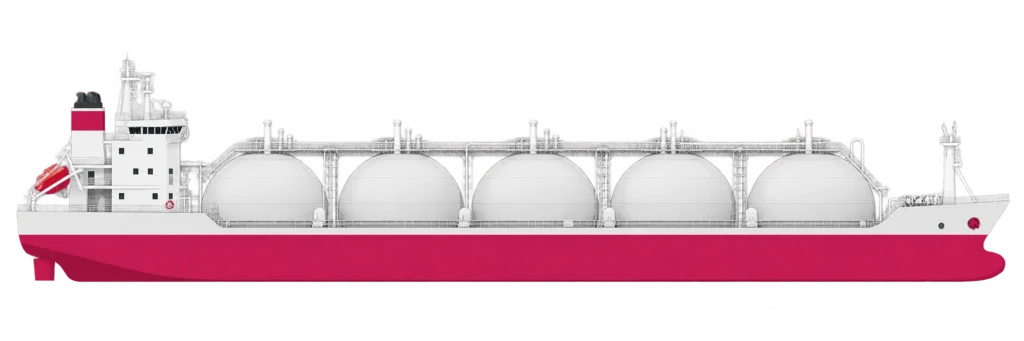
Typical size: ~25,000–45,000 m³
Typical cargoes: LPG, Ammonia, Petrochemical gases
Trading profile: Regional / Medium-haul international
Typical configuration: Fully refrigerated or semi-refrigerated
Medium Gas Carriers provide more scale than Handysize tonnage while remaining considerably more flexible than a VLGC.
They are used across LPG, ammonia and specialist gas trades and are increasingly relevant as international ammonia movements develop.
Their size allows operators to combine larger parcels with access to terminals that cannot necessarily accommodate very large gas carriers.
Commercially: MGCs occupy an important middle ground between specialist flexibility and long-haul scale.
VLGC
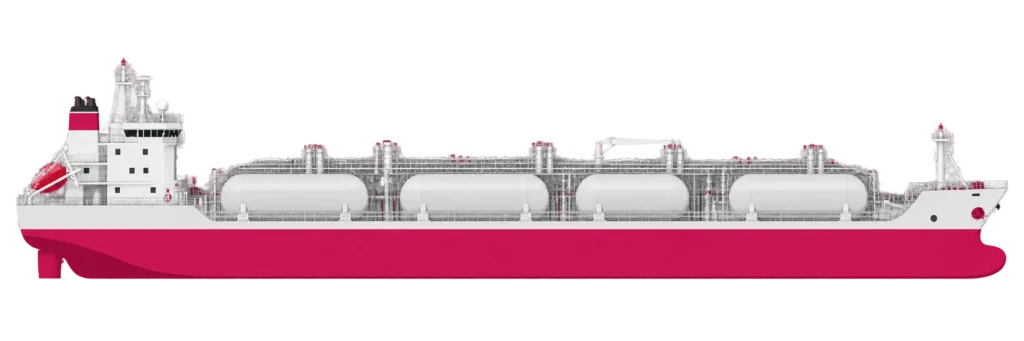
Typical size: ~70,000–90,000 m³
Typical cargoes: Propane, Butane, LPG, Ammonia
Trading profile: Long-haul / Major LPG routes
Typical configuration: Fully refrigerated
Very Large Gas Carriers are the principal vessel class for large-volume international LPG movements.
They are particularly important on long-haul routes linking major export centres in the Middle East and United States with Asian demand.
Modern VLGCs are generally designed around efficient carriage of propane and butane, although ammonia-capable vessels are increasingly relevant to future fleet development.
Commercially: VLGC earnings are closely tied to LPG export volumes, long-haul tonne-mile demand and the availability of suitable terminal infrastructure.
Conventional LNG Carrier
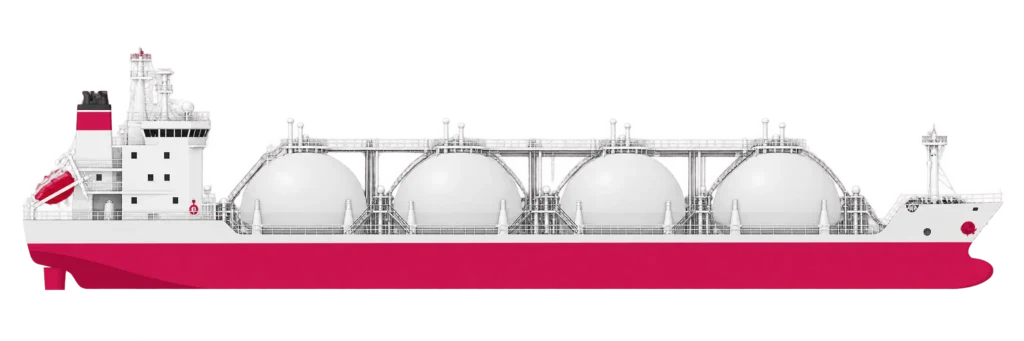
Typical size: ~125,000–180,000 m³
Typical cargoes: LNG
Trading profile: Global / Long-haul
Typical configuration: Cryogenic LNG carrier
Conventional LNG carriers are purpose-built to transport natural gas at approximately -162°C, allowing it to remain in liquid form during the voyage.
Modern vessels commonly sit around the 170,000–180,000 m³ range and trade between large liquefaction projects and LNG import terminals around the world.
Cargo-containment systems, boil-off management and terminal compatibility make LNG shipping technically distinct from most other merchant-vessel markets.
Commercially: LNG shipping is closely linked to long-term supply projects, terminal compatibility and increasingly active spot and portfolio trading.
Q-Flex & Q-Max
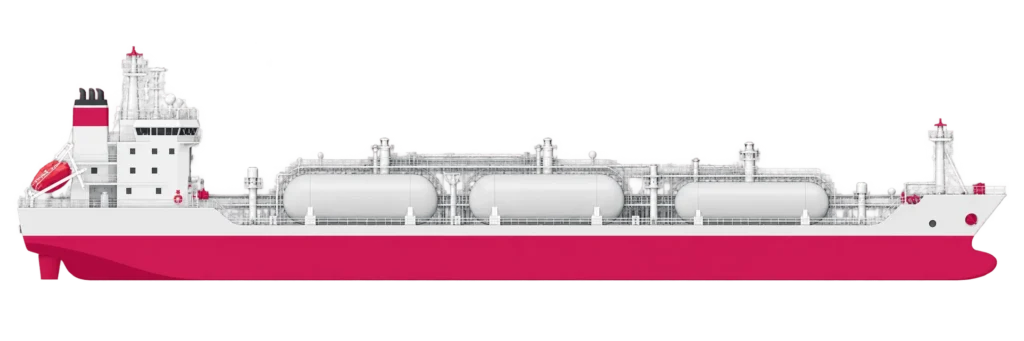
Typical size: ~210,000–266,000 m³
Typical cargoes: LNG
Trading profile: Very large-volume / Long-haul LNG
Typical configuration: Very large cryogenic LNG carrier
Q-Flex and Q-Max vessels were developed to move exceptionally large LNG parcels, particularly from Qatar’s export projects.
Q-Flex vessels typically carry around 210,000–217,000 m³, while Q-Max vessels can carry approximately 263,000–266,000 m³.
Their enormous capacity offers substantial economies of scale, but their size also limits the number of terminals capable of accepting them.
Commercially: these vessels depend on large LNG projects, compatible receiving infrastructure and routes capable of supporting very high-volume cargo movements.
From Regional LPG Parcels tO 266,000 m³ of LNG
Gas shipping is not one homogeneous market.
A small pressurised LPG carrier, an ammonia-capable MGC and a Q-Max LNG vessel may all be described as gas carriers, but their cargo systems, terminals, counterparties and commercial markets are completely different.
Capacity is normally discussed in cubic metres rather than deadweight, while the vessel’s containment technology determines which gases it can safely carry.
Those differences feed directly into chartering, terminal compatibility, cargo handling, voyage economics and the experience required from gas-shipping brokers, charterers and operators.
Container Ship Classes
Container capacity shapes route choice, port access and network economics.
Feeder
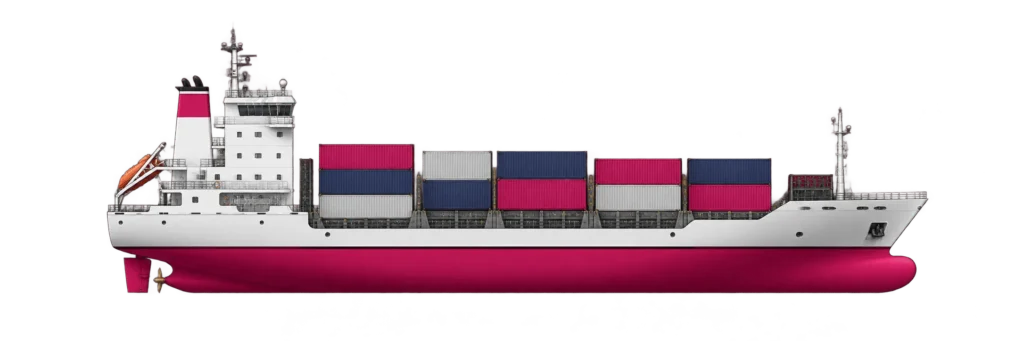
Typical size: Up to ~3,000 TEU
Typical cargoes: Consumer goods, Food products, Coffee, Cocoa, Nuts, Chemicals, Machinery
Trading profile: Coastal / Regional / Short-sea
Typical configuration: Small container vessel
Feeder vessels connect smaller ports with major regional and global container hubs.
They are a core part of hub-and-spoke liner networks, moving cargo between local markets and the deep-sea services operated by much larger ships.
For commodity markets, feeders can carry anything from bagged coffee and cocoa to edible nuts, chemicals, refrigerated food and other containerised agricultural products.
Commercially: flexibility and access to smaller ports matter more than maximum container capacity.
Feedermax
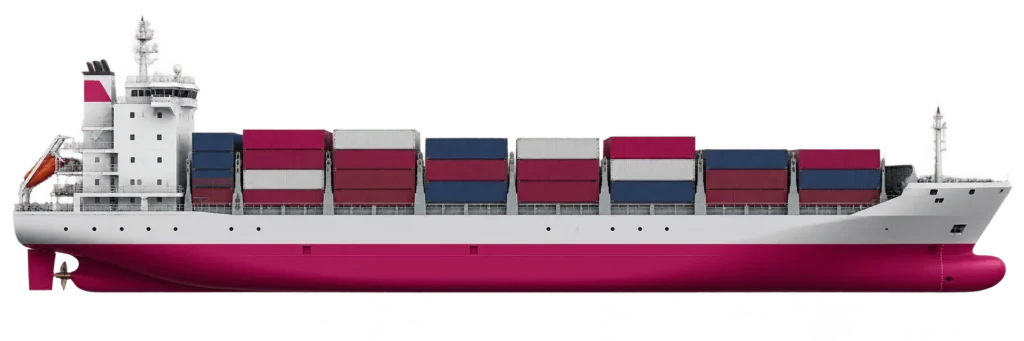
Typical size: ~3,000–5,000 TEU
Typical cargoes: General containerised cargo, Agricultural products, Reefer cargo, Industrial goods
Trading profile: Regional / Secondary deep-sea
Typical configuration: Medium feeder vessel
Feedermax vessels provide greater capacity than traditional feeders while retaining access to a relatively broad range of ports.
They are used on larger regional services and secondary international routes where a full deep-sea vessel would be uneconomic or operationally unsuitable.
Their role varies considerably between liner networks, with some acting as large feeder vessels and others operating independent regional services.
Commercially: Feedermax tonnage sits between local connectivity and the economics of larger mainline services.
Panamax
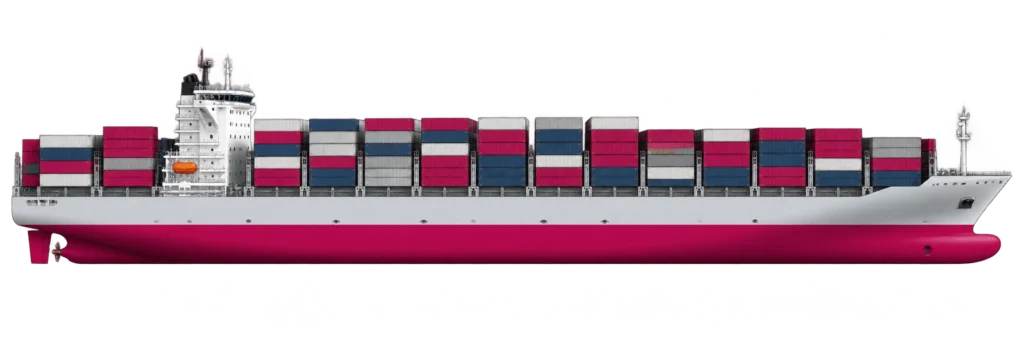
Typical size: ~3,000–5,000 TEU
Typical cargoes: Consumer goods, Foodstuffs, Agricultural commodities, Machinery, Manufactured products
Trading profile: International / Traditional deep-sea
Typical configuration: Original Panama Canal dimensions
Panamax container ships were designed around the dimensional limits of the original Panama Canal locks.
Capacity varies by vessel design, but the class became one of the defining benchmarks of container shipping as global liner networks expanded.
Larger modern ships have displaced much Panamax tonnage from the biggest east-west trades, but the class remains commercially important across regional and secondary routes.
Commercially: Panamax is an older size benchmark, but still a useful reference for understanding liner fleet development and port constraints.
Post-Panamax
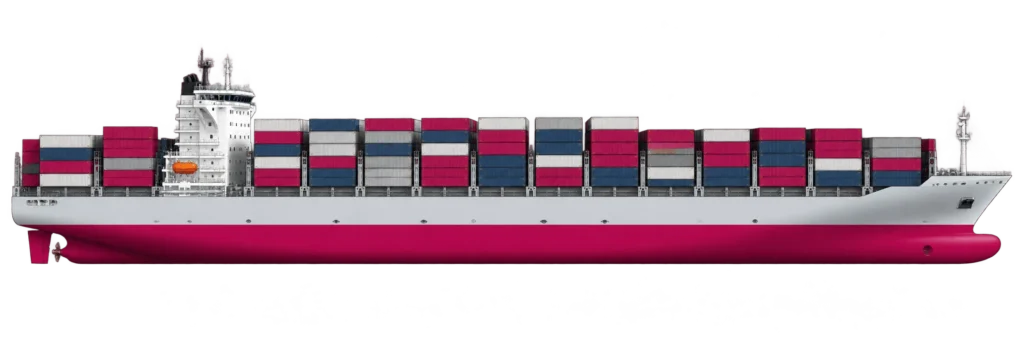
Typical size: ~5,000–10,000 TEU
Typical cargoes: General containerised freight, Retail goods, Food products, Industrial cargoes
Trading profile: Deep-sea / Major liner routes
Typical configuration: Wider than original Panama Canal limits
Post-Panamax vessels were built beyond the beam and dimensional limits of the original Panama Canal locks.
Their greater width allowed significantly more containers to be carried without the extreme length of later ultra-large vessels.
The class became increasingly important as container trade volumes grew and major ports invested in deeper berths, larger cranes and improved terminal infrastructure.
Commercially: Post-Panamax vessels marked the point where port infrastructure increasingly had to adapt to the ship rather than the other way around.
New Panamax / Neo-Panamax
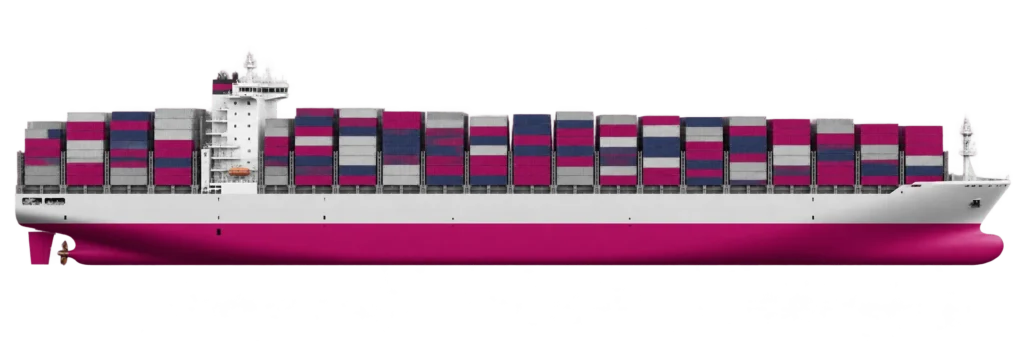
Typical size: ~10,000–15,000 TEU
Typical cargoes: Consumer goods, Machinery, Foodstuffs, Automotive parts, Containerised commodities
Trading profile: Major deep-sea / Intercontinental
Typical configuration: Expanded Panama Canal compatible
New Panamax, or Neo-Panamax, vessels are designed around the larger locks opened as part of the Panama Canal expansion.
They provide substantial capacity while retaining access to one of the world’s most commercially important shipping corridors.
The class is widely used across major east-west and north-south liner routes and has become an important benchmark for modern container shipping.
Commercially: Neo-Panamax vessels combine large-scale economics with access to a broader route network than the very largest container ships.
ULCV
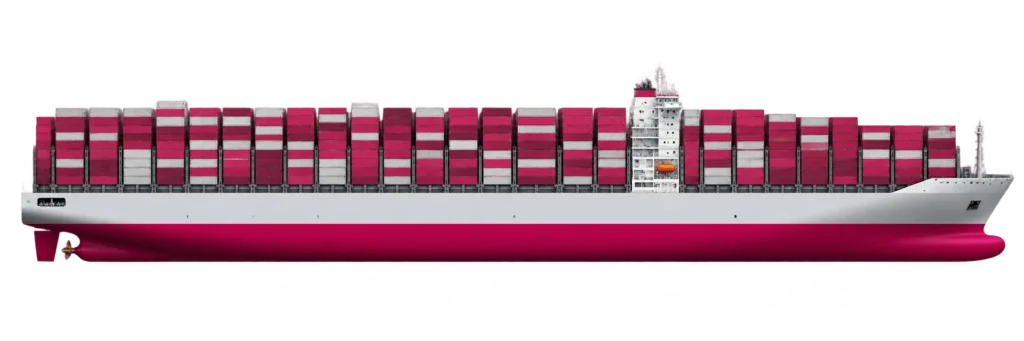
Typical size: 18,000–24,000+ TEU
Typical cargoes: High-volume consumer, Industrial, Retail, Automotive, Food and commodity containers
Trading profile: Major east-west trunk routes
Typical configuration: Ultra Large Container Vessel
Ultra Large Container Vessels sit at the top end of the liner fleet.
Ships above 20,000 TEU are designed primarily for the highest-volume routes, particularly between Asia and Europe, where enormous cargo flows can support the economics of such large vessels.
Their dimensions require deepwater ports, very large container cranes, extensive yard capacity and efficient inland connections.
Commercially: ULCVs offer exceptional economies of scale, but only where ports, terminals and cargo volumes are capable of supporting them.
From Regional Feeders to More Than 24,000 TEU
Container shipping works as a network rather than a simple progression from small ships to large ones.
A feeder serving a regional port may be just as important to the movement of a cargo as the ULCV carrying it across an ocean. Containers can transfer between several vessels before reaching their final destination.
The cargo mix is equally broad. Coffee, cocoa, edible nuts, refrigerated food, chemicals and industrial materials can move alongside consumer goods and manufactured products within the same liner network.
Those differences in vessel scale affect service design, port selection, terminal infrastructure, freight economics and the experience required across liner commercial, operations and network-planning roles.
Coastal, Short-Sea & Multipurpose Vessels
Smaller ships keep regional cargo moving beyond the deep-sea network.
Coaster
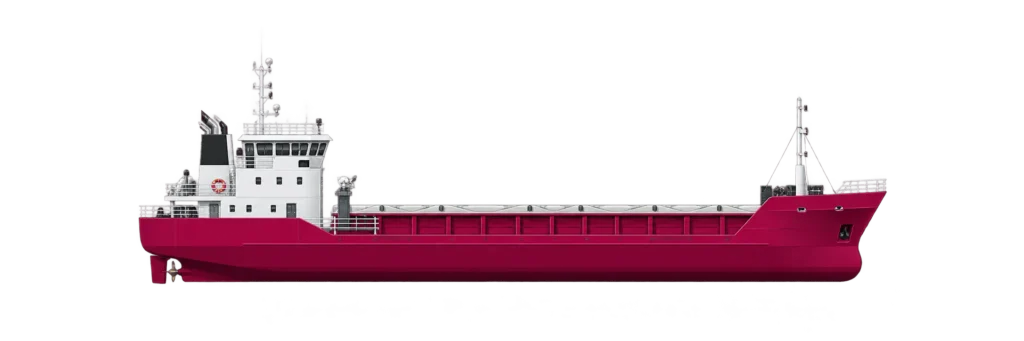
Typical size: ~1,000–15,000 DWT
Typical cargoes: Grain, Fertilizer, Aggregates, Cement, Steel, Scrap, Forest products
Trading profile: Coastal / Short-sea / Regional
Typical configuration: Small bulk or general cargo vessel
Coasters move smaller cargo parcels between ports within a region.
They are particularly important where larger vessels cannot enter because of draught, berth length or cargo-volume limitations.
Northern Europe, the Mediterranean and many Asian markets support active coaster trades across agricultural, industrial and construction commodities.
Commercially: coasters give cargo owners access to smaller ports and allow regional parcels to move without relying on deep-sea tonnage.
River-Sea Vessel
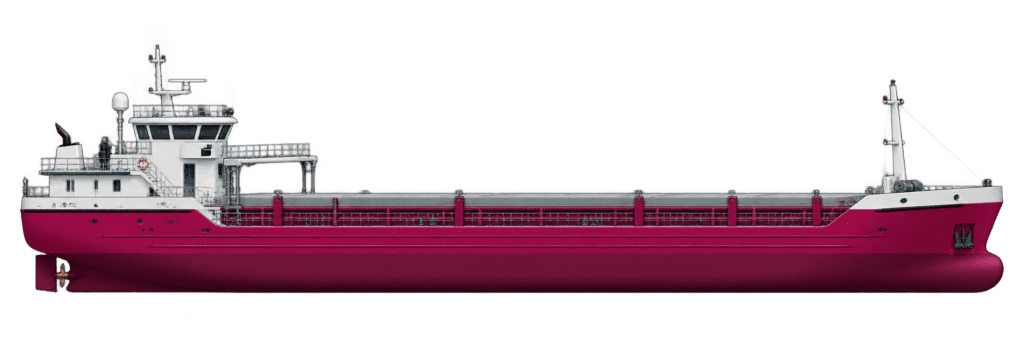
Typical size: ~2,000–10,000 DWT
Typical cargoes: Grain, Steel, Fertilizer, Coal, Aggregates, General cargo
Trading profile: Inland waterway / Coastal crossover
Typical configuration: Shallow-draught vessel
River-sea vessels are designed to operate across both inland waterways and coastal sea routes.
Their shallow draught, lower air draught and compact dimensions allow them to reach industrial and agricultural areas far inland before continuing directly to another port without transshipment.
They are especially relevant where major rivers connect production centres with international shipping markets.
Commercially: the ability to move cargo directly between inland and coastal destinations can remove an entire handling stage from the supply chain.
Multipurpose & General Cargo
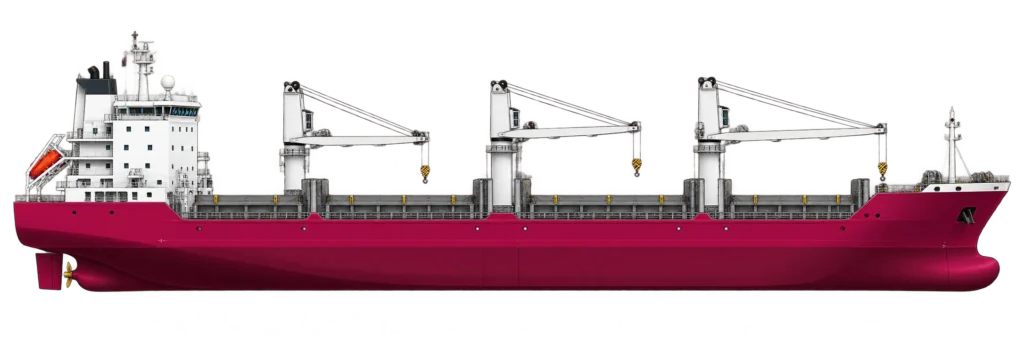
Typical size: ~5,000–30,000 DWT
Typical cargoes: Steel, Project cargo, Bagged commodities, Timber, Machinery, Breakbulk
Trading profile: Regional / International niche trades
Typical configuration: Often geared, flexible cargo holds
Multipurpose vessels are designed around cargo flexibility rather than a single commodity.
They may carry conventional breakbulk on one voyage and steel, machinery, timber or bagged agricultural products on the next. Many have onboard cranes, making them useful at ports with limited cargo-handling infrastructure.
Specialist designs can also carry heavy-lift or project cargo alongside more conventional freight.
Commercially: these vessels are valuable where cargo type, parcel size or port infrastructure makes a standard bulk or container solution unsuitable.
Sometimes Flexibility Matters More Than Scale
Smaller commercial vessels occupy markets that the largest ships simply cannot serve.
Their economics depend on port access, parcel size, cargo-handling capability and the ability to work regional trading patterns efficiently.
They also show why vessel classification cannot be understood from carrying capacity alone. A 5,000 DWT river-sea ship and a similarly sized coaster may be designed around completely different physical constraints and customer requirements.
For charterers, brokers and operators, knowing those differences can be just as important as recognising the distinction between Panamax and Capesize tonnage.
Every Hull Has a Trade Written Into Its Lines.
Understanding Ship Measurements
Different vessel markets use different measures of size and capacity.
Ship size cannot be described by one number alone.
A dry bulk carrier may be discussed primarily in deadweight tonnes, a container ship in TEU, and an LNG carrier in cubic metres. Physical dimensions such as beam and draught then determine where that capacity can actually be deployed.
| Measurement | What It Means | Why It Matters Commercially |
|---|---|---|
| DWT | Deadweight tonnage. The total weight a vessel can safely carry, including cargo, fuel, fresh water, stores, crew and provisions. Usually expressed in metric tonnes. | The principal capacity measure for bulk carriers and tankers. It gives a useful indication of potential cargo size, although actual cargo intake varies with fuel, draught and voyage requirements. |
| GT | Gross tonnage. A calculated measure based on the internal volume of a vessel rather than its weight. GT is technically dimensionless. | Used extensively for regulation, registration, port dues and other administrative purposes. It should not be confused with cargo-carrying capacity. |
| TEU | Twenty-foot equivalent unit. One standard 20-foot container equals one TEU. A standard 40-foot container represents two TEU. | The main measure used to describe container-ship capacity and the scale of container terminals, liner services and port throughput. |
| m³ / CBM | Cubic metres. A measure of cargo volume rather than weight. | Particularly important in LNG, LPG and other gas-carrier markets, where ships are commonly described by the volume their containment systems can hold. |
| LOA | Length Overall. The maximum length of the vessel from its furthest point forward to its furthest point aft. | Berths, locks, turning basins and terminals can impose maximum vessel lengths. LOA therefore affects which infrastructure a ship can use. |
| Beam | The maximum width of the vessel at its widest point. | Beam can determine access to canals, locks, berths and terminal equipment. Panamax and Neo-Panamax classifications are closely associated with dimensional limits of this kind. |
| Draught | The vertical distance between the waterline and the lowest part of the vessel below the surface. Draught increases as a ship is loaded. | One of the most important restrictions on vessel deployment. Water depth at ports, channels and terminals can limit how much cargo a ship is able to load. |
| Air Draught | The vertical distance from the waterline to the vessel’s highest fixed point. | Important where vessels pass beneath bridges, power lines or other overhead infrastructure. It is particularly relevant on rivers and certain restricted waterways. |
Capacity Does Not Always Mean Cargo Intake
A 180,000 DWT Capesize cannot necessarily load 180,000 tonnes of iron ore on every voyage.
Fuel, stores and other weights count towards deadweight, while the permitted sailing draught at the loading or discharge port may restrict the vessel before its theoretical capacity is reached.
The same principle applies elsewhere. A container ship’s published TEU capacity does not mean every possible mix of loaded containers can be carried simultaneously, because container weights, stability and vessel configuration also matter.
Gas carriers add another distinction. Their headline capacity is normally based on cargo volume, while the physical characteristics of LNG, LPG, ammonia and petrochemical gases require different containment systems and operating conditions.
Commercial vessel size therefore needs to be understood alongside the cargo, route and infrastructure involved.
Why Vessel Class Matters Commercially
Ship size affects far more than how much cargo fits onboard.
Vessel class influences the freight market a ship competes in, the ports it can use, the cargo parcels it can carry and the economics of the voyage.
For charterers, brokers and operators, choosing between vessel classes is therefore a commercial decision as much as a technical one.
Cargo Suitability
Different commodities naturally concentrate in different vessel segments.
Iron ore supports Capesize and VLOC movements, grain trades across Handysize through Panamax tonnage, while refined petroleum products commonly move on MR and LR tankers.
The cargo parcel often narrows the realistic vessel options before freight is even considered.
Freight Economics
Larger vessels can reduce transport cost per tonne or container when sufficient cargo is available.
That advantage has limits. Greater scale may require deeper water, larger terminals and significantly bigger cargo parcels.
The cheapest freight rate only matters if the vessel works for the entire voyage.
Port & Terminal Access
Draught, berth length, turning circles, crane capability and loading rates all affect which vessels a port can accept.
A smaller ship can therefore remain commercially attractive even when larger tonnage offers a lower headline cost.
Port restrictions can determine vessel choice as much as cargo volume.
Canal & Waterway Restrictions
Several major vessel classes developed around physical shipping constraints.
Panamax and Neo-Panamax reflect Panama Canal dimensions, while Suezmax is closely associated with the practical limits of the Suez Canal. River-sea vessels face their own restrictions around locks, bridges and shallow waterways.
Infrastructure has shaped vessel design for generations.
Voyage Distance & Trade Flow
Large ships make most sense where substantial cargo volumes move over long distances.
Capesize, VLCC and ULCV economics work particularly well on major deep-sea routes, while smaller ships remain better suited to fragmented regional trades.
Vessel classes often become closely associated with the commodity routes that support them.
Vessel Availability
The theoretically perfect vessel is irrelevant if suitable tonnage is not available in the loading window.
Charterers and brokers therefore monitor vessel positions, open dates and competing cargoes, sometimes moving into neighbouring ship sizes when the preferred market tightens.
Availability can change the commercial answer very quickly.
Vessel Class Shapes the Talent Market Too
Commercial shipping careers often develop around specific vessel segments.
A Capesize broker builds a different client network from an MR tanker broker. An LNG charterer works with different contracts, terminals and counterparties from somebody operating Supramax dry bulk tonnage. Even where job titles are identical, the market knowledge behind them can be very different.
For recruitment, vessel-class experience tells us a great deal about the cargoes, routes, freight exposure and counterparties somebody has actually worked with.
Understanding the ship helps us understand the commercial market behind the CV.
Vessel Class FAQs
Common ship-size questions explained in practical commercial terms.
What is the difference between Panamax and Kamsarmax?
Panamax bulk carriers were traditionally designed around the dimensional limits of the original Panama Canal locks.
Kamsarmax vessels are generally slightly larger, commonly around 80,000–85,000 DWT, and take their name from the maximum dimensions historically associated with the Port of Kamsar in Guinea.
Both classes are heavily used across grain, coal and other major dry-bulk trades.
What is the largest dry bulk vessel class?
At the largest end of the dry-bulk market are Very Large Ore Carriers (VLOCs), some of which approach or exceed 400,000 DWT.
They are principally designed for very large iron-ore movements between deepwater export and import terminals.
Capesize and Newcastlemax vessels sit below them and offer somewhat greater trading flexibility.
What is the difference between Aframax and Suezmax tankers?
Aframax tankers generally sit around 80,000–120,000 DWT, while Suezmax vessels are typically around 120,000–200,000 DWT.
Aframaxes are widely used on regional and medium-haul crude routes where port restrictions or parcel sizes make larger vessels unsuitable.
Suezmaxes carry larger crude parcels and are more prominent on long-haul international trades.
How much crude oil can a VLCC carry?
A modern Very Large Crude Carrier (VLCC) is commonly around 300,000 DWT and can typically carry roughly two million barrels of crude oil.
Actual cargo intake varies depending on the vessel, cargo density, fuel carried and draught restrictions at the relevant ports.
What does TEU mean in container shipping?
TEU stands for twenty-foot equivalent unit.
One standard 20-foot shipping container equals one TEU, while a standard 40-foot container represents two TEU.
Container vessels, terminal capacity and port throughput are all commonly described using this measure.
What is the difference between Panamax and Neo-Panamax container ships?
Traditional Panamax vessels were designed around the original Panama Canal locks.
Neo-Panamax, or New Panamax, vessels take advantage of the larger locks opened as part of the canal expansion and can therefore be substantially wider and carry far more containers.
Modern Neo-Panamax ships commonly sit in the 10,000–15,000 TEU range.
What is a VLGC?
A VLGC, or Very Large Gas Carrier, is a large vessel primarily used to transport LPG such as propane and butane.
Modern VLGCs commonly have cargo capacity of around 70,000–90,000 m³ and are widely used on long-haul routes linking major LPG export regions with Asian and other importing markets.
What is the difference between DWT and GT?
Deadweight tonnage (DWT) measures the total weight a vessel can safely carry, including cargo, fuel, water, stores and other loads.
Gross tonnage (GT) is based on the vessel’s enclosed internal volume.
DWT is therefore closely related to carrying capacity, while GT is primarily used for regulatory, administrative and port purposes.
Why can’t the largest ships use every port?
Large ships require sufficient water depth, berth length, turning space and terminal infrastructure.
Container vessels may also need cranes with enough outreach to work the full width of the ship, while bulk carriers and tankers require terminals capable of handling their draught and cargo volumes.
This is why greater carrying capacity does not automatically make a larger ship the best commercial choice.
Why are some vessel classes named after places?
Large ships require sufficient water depth, berth length, turning space and terminal infrastructure.
Container vessels may also need cranes with enough outreach to work the full width of the ship, while bulk carriers and tankers require terminals capable of handling their draught and cargo volumes.
This is why greater carrying capacity does not automatically make a larger ship the best commercial choice.
Explore Related Markets
Shipbroking · Freight Derivatives & FFAs · Shipping Operations, Claims & Demurrage · Chartering · Crude Oil · Refined Products
Specialist Search Across Global Shipping Markets
Imperium Commodity Search works internationally across shipping, freight and physical commodity markets.
Our search work is built around the vessel classes, cargoes, routes, counterparties and commercial exposure behind the job title, from experienced specialists through to senior leadership appointments.